Reference :
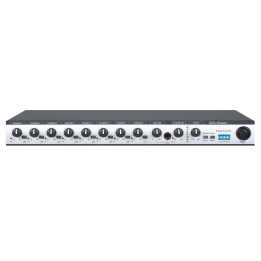
PM 8P
My Rondbot is available 24/7!
Are you looking for an amp compatible with your installation? A replacement product? A technical recommendation for your project?
Ask your question directly to our AI assistant.
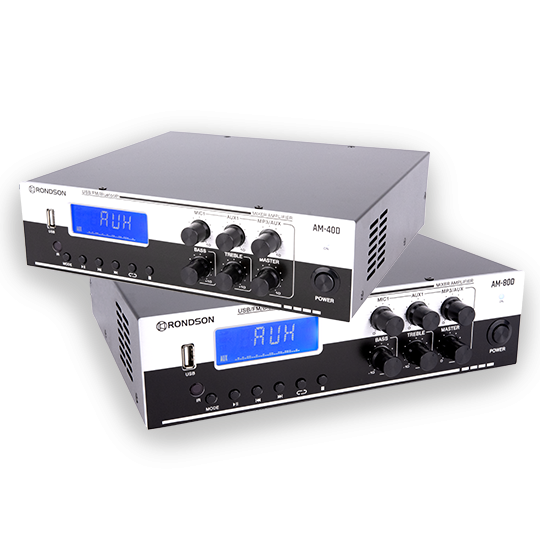
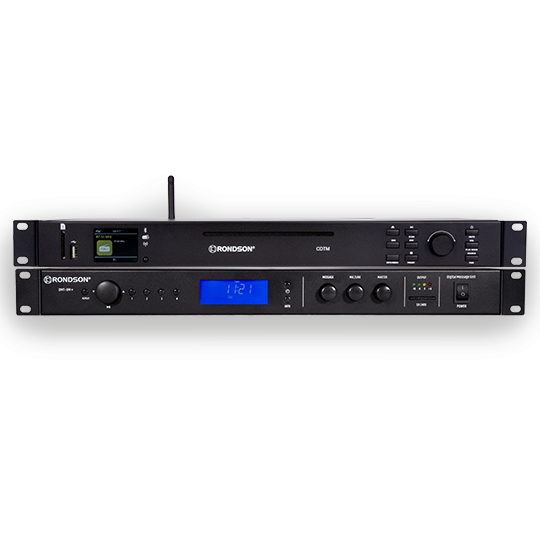
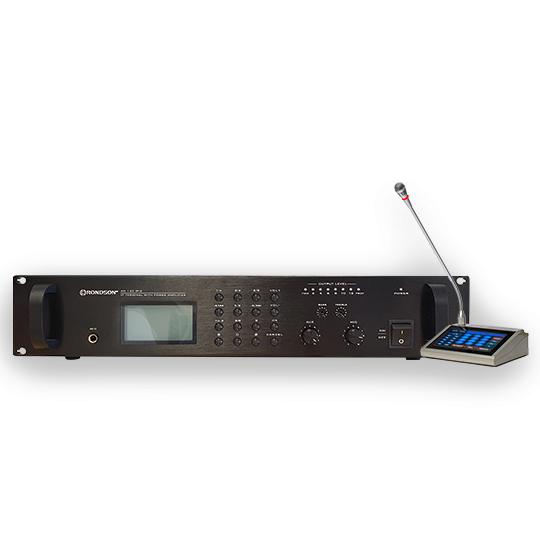
The preamplifier can process certain audio sources such as a Tuner, MP3 CD, USB, SD, or Bluetooth... and redirect them to an amplifier in order to offer a musical broadcast, an advertisement or an audio message to a targeted audience.
In most cases, this same preamp also provides volume control, bass and treble tone control, equalizers, etc.
Filter By
Filter By
Reference :
PM 8P
Are you looking for an amp compatible with your installation? A replacement product? A technical recommendation for your project?
Ask your question directly to our AI assistant.
What is the difference between an amplifier and a preamplifier?
An amplifier provides the power needed to power your speakers and transmit sound at a volume that fits your space. The preamplifier acts as the "brain" of your audio system: it receives and processes signals from different multimedia sources (tuner, CD player, Bluetooth) before transmitting them to the amplifier. Unlike a classic amplifier, the preamplifier has multiple inputs and allows you to adjust the key (bass/high), volume and mix multiple sources simultaneously. In summary, the preamplifier prepares and optimizes the audio signal, while the amplifier transforms it into sound power.
Why put a preamplifier?
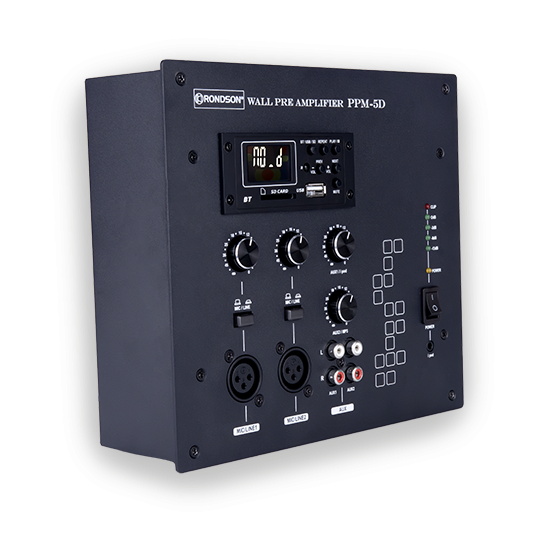
The addition of a rackable preamplifier like the MA-1408 or wall-mounted one like the PPM-5DN gives you flexibility to handle multiple audio sources simultaneously. You can connect microphones, USB players, FM tuners, smartphones via Bluetooth or even turntables to a single device. The preamp centralizes all your sources and facilitates the management of your sound broadcast, whether for background music, advertisements or information messages. It becomes essential as soon as you need to mix different audio inputs, manage priorities between sources or integrate several microphones in a professional installation (shops, restaurants, hotels, gyms).
Can a preamplifier improve sound quality?
For example, the MA-1410 preamplifier significantly improves your audio performance thanks to its advanced tone settings (equalizer, bass and treble control) and optimized electronic circuits that preserve signal integrity. A good preamp reduces background noise and guarantees an excellent signal/noise ratio, essential for professional listening. It also allows to adapt the level of each source independently, thus avoiding volume imbalances between different inputs. For demanding installations requiring precise frequency control, models equipped with equalizers like the PEQ-1131 offer complete customization of your sound system.
When to use a preamplifier?
The use of a preamplifier is essential as soon as you have to manage several audio sources and microphones in your installation. This is the typical case of businesses requiring background music combined with microphone announcements, meeting rooms with several speakers, or even public spaces requiring management of sound priorities. The wall cabinet preamp like the MX-3 is particularly suitable for installations requiring an audio matrix with flexible signal routing. If your project involves multiple broadcast areas, priority emergency messages, or simply the need to centralize several audio equipment, the preamp becomes the heart of your professional sound system.
What connectivity for a preamplifier?
The connectivity of a preamplifier varies depending on the model to adapt to all types of equipment. You will generally find XLR, RCA (CD players, tuners), 6.35mm jacks and screw terminals for fixed installation connections. Recent models like the SPA-12 also incorporate USB, Bluetooth or SD inputs to connect your digital devices. The outputs are just as varied: line (to amplifier), recording, or even zoned outputs for a multi-space broadcast. For demanding professional installations, prefer symmetrical XLR connections that ensure optimal parasite-free signal transmission even over long distances.