




 Catégories produits
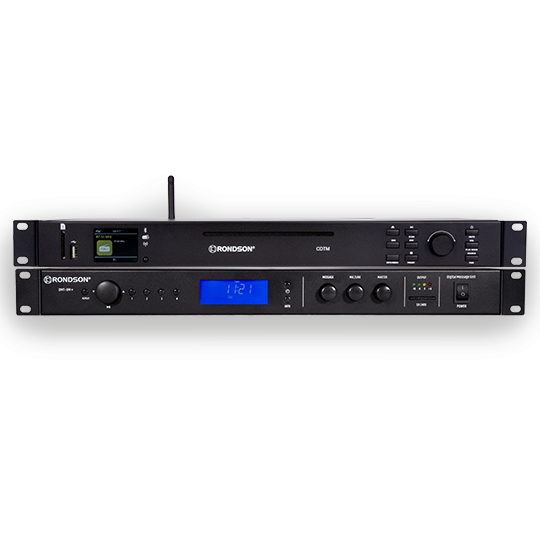
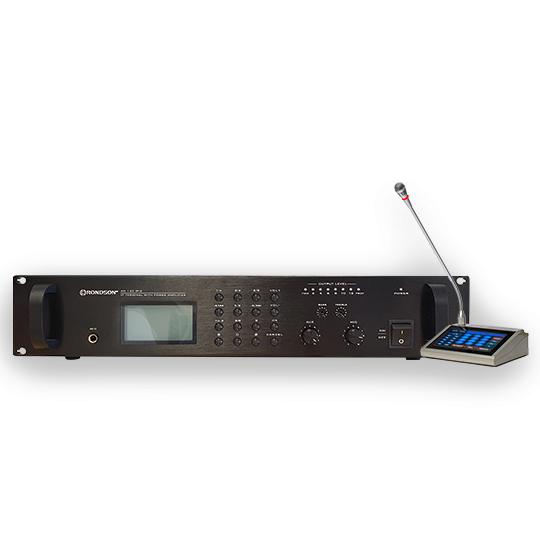
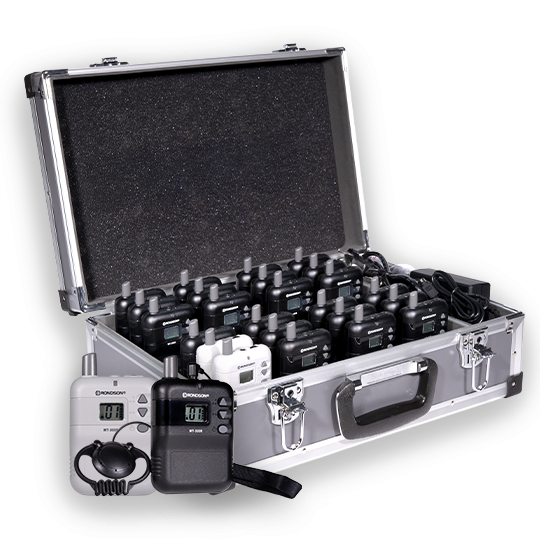
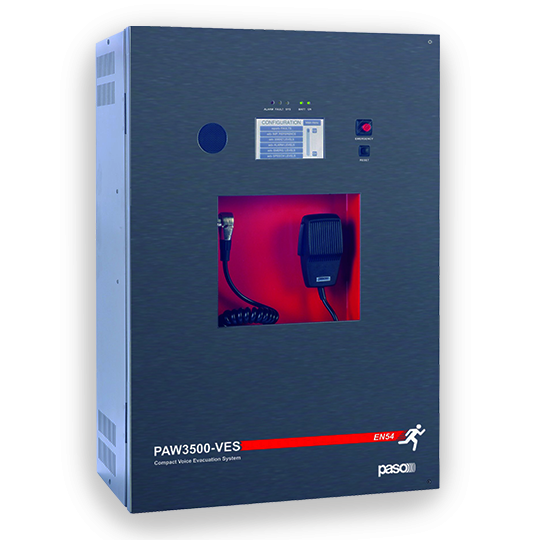
Find all the information and technical support you need for your sound system project. Our sales and engineering team will support you throughout your project, offering a range of services from consultancy and design to installation, right through to commissioning and maintenance of the equipment by our team.
For any enquiries, please contact our experienced technicians via this form.
100V line
In professional sound systems, the 100V line enables sound to be distributed evenly over long distances without any loss of power, unlike a low-impedance (4 or 8 Ω) system, which is limited to short ranges. The principle relies on a step-up transformer at the amplifier output, followed by a step-down transformer on each loudspeaker. This technology is essential for providing sound systems in schools, shopping centres or care homes covering large areas.
EN 54 certification
An EN 54-certified public address system (PAS) broadcasts voice evacuation messages integrated into the fire safety system (FSS). The EN 54-16 standard covers control equipment, whilst EN 54-24 covers loudspeakers. This certification is mandatory for many public access buildings (categories 1 and 2), high-rise buildings and emergency response centres, where a conventional audible alarm is not sufficient to ensure evacuation.
SSP
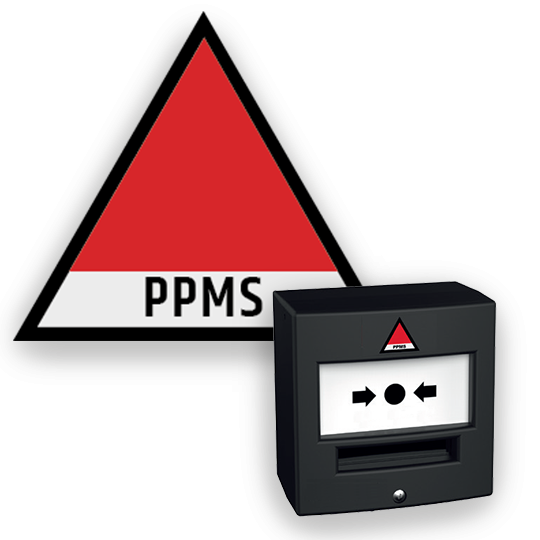
The PPMS (Specific Security Plan) requires schools to have an audible alarm system capable of triggering a lockdown or evacuation from any point on the premises. Rondson offers several triggering methods — control unit, call-out microphone console, and an IP-based solution for multi-building sites — compatible with both existing installations and new projects.
Magnetic buckle
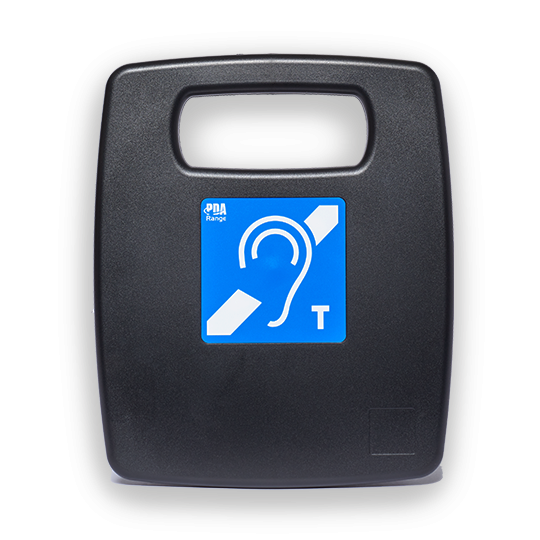
The magnetic induction loop (MIL) transmits sound directly to the hearing aids of people with hearing loss, without echoes or background noise, over areas ranging from 1 to 1,000 m² (ticket counters, places of worship, reception desks). Compliant with the NF EN 60118-4 standard, it meets the accessibility requirements for public access buildings. Rondson offers fixed and portable loop amplifiers suited to every configuration.
A Practical Guide to Sound Systems
How many speakers are needed for a 250 m² room? What amplifier power rating should you choose? What cable cross-section is required for a 300-metre run? This practical guide provides a comprehensive guide to system design: choosing speakers, calculating sound levels in dB, selecting an amplifier, and cabling guidelines. Includes a downloadable PDF guide.
Our sound systems
Shops, schools, care homes, shopping centres, places of worship, stadiums, campsites: every venue open to the public has its own acoustic and regulatory requirements. Discover our solutions tailored to each sector — equipment recommendations, specific requirements (ambient noise, reverberation, footfall) — to ensure your project is perfectly suited to your premises.
IP protection rating
The IP rating (e.g. IP54, IP65) measures a loudspeaker’s resistance to dust and water: the first digit indicates protection against solid objects, the second against liquids. This is a key factor when selecting equipment for outdoor use that is exposed to the elements or vandalism. See the full table of protection ratings in accordance with standards IEC 60529, EN 60529 and NF C 20-010.
CCTP
The CCTP (Specification of Special Technical Conditions) sets out the technical requirements for a public address system project: applicable standards, power and intelligibility requirements, and EN 54 certification. Rondson provides ready-to-use templates tailored to different types of premises — schools, care homes, shopping centres, hotels and multi-purpose halls — and can produce a bespoke design (schematic diagram, layout) through its design office.
100V wiring
How do you connect a 100V amplifier to your speakers? The connection is made via the COM and 100V terminals on the amplifier side, then the COM terminal and the selected power rating (20W, etc.) on the speaker side — not to be confused with the 4/8 Ω terminals, which are reserved for low impedance. The wiring varies depending on the amplifier range (AM, AME-6, ZA, 4Z, AM-UB-2): detailed diagrams for each series are provided in this guide.
Connecting the Speakers
Polarity, impedance, series or parallel connection: connecting low-impedance loudspeakers (4 or 8 Ω) is subject to specific rules to prevent damage to the amplifier. If the total impedance is too low, it will overload the amplifier’s output; reverse polarity will degrade sound quality. These terminals, which differ from the 100V line, are reserved for this type of installation.