




 Catégories produits
THE VARIOUS CRITERIA TO BE TAKEN INTO ACCOUNT WHEN INSTALLING A SOUND SYSTEM IN A PUBLIC VENUE
Type of sound system:
- Comfort (background music + calls + messages)
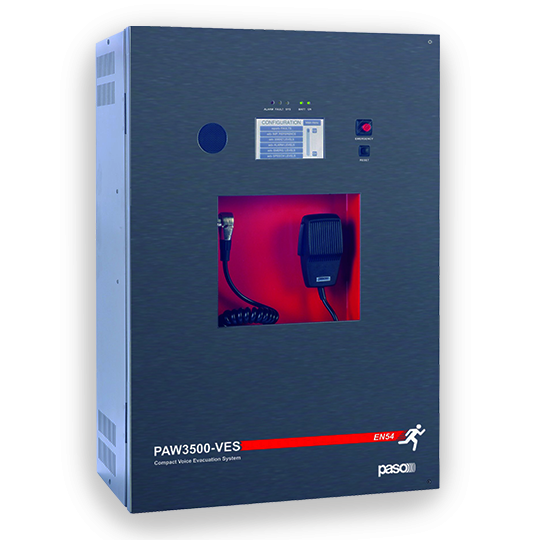
- Safety (Evacuation – EN 54 certification)
The venue to be sound-engineered:
Shops, restaurants, places of worship, schools, supermarkets, shopping centres, care homes, swimming pools, stadiums…
Building specifications:
Floor area, partitioning, height, suspended ceiling, ambient noise, reverberation (echo)
The venue to be fitted with a sound system:
Shops, restaurants, places of worship, schools, supermarkets, shopping centres, care homes, swimming centres, stadiums…
Building specifications:
Floor area, partitioning, height, suspended ceiling, ambient noise, reverberation (echo)
CHOOSING SPEAKERS
The type of audio content determines which speakers to use: standard speakers for simple voice messages, or speakers with a wide frequency response to reproduce high-quality background music.
Typical loudspeakers:
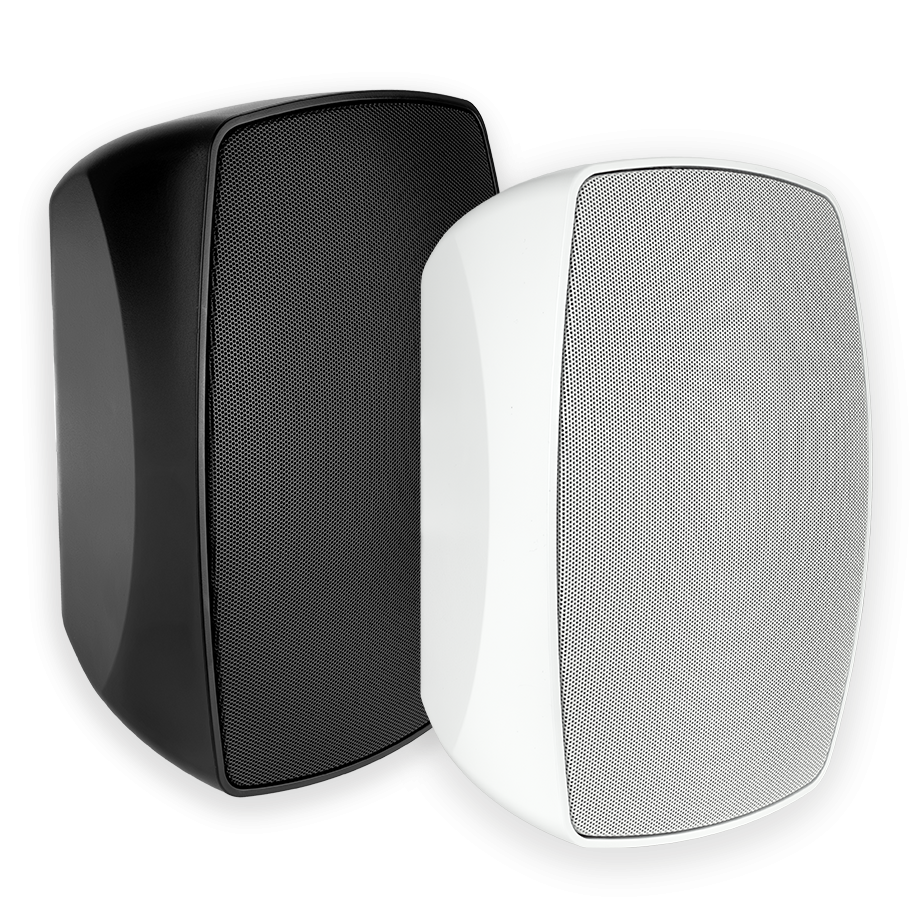
- The built-in or suspended speaker is notable for its ease of use.
- Wall-mounted speakers generally offer more power than in-wall speakers.
- The sound projector is most often used outdoors or because it is waterproof.
- The acoustic column prioritises range and reverberation.
Speakers
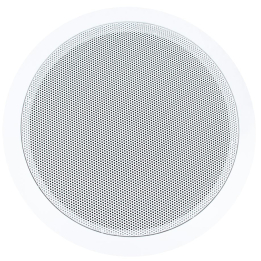
Reference :
CSL 603
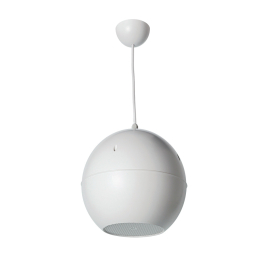
Reference :
OD-105B / OD-105N

Reference :
PBT-4B / PBT-4N
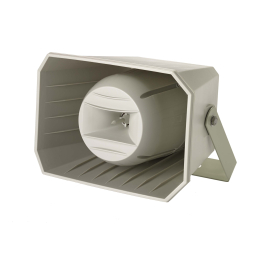
Reference :
HS-48
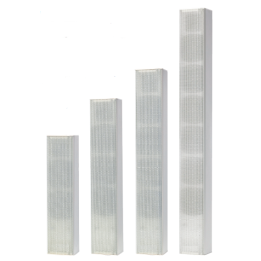
Reference :
CO120 / CO130 / CO140 / CO160
A loudspeaker comes in different power ratings (20, 10 or 5 W, for example), allowing it to be adjusted to suit ambient noise levels or ceiling height.
HOW MANY SPEAKERS?
To work out how many loudspeakers are needed for a system, divide the area of the venue to be covered by the area that a single loudspeaker can cover.
(E.g.: you need around 5 CSL-603 loudspeakers to provide sound for a room measuring 250 m², bearing in mind that a single loudspeaker covers 45 m² at a height of between 3 and 5 metres).
NOISE LEVEL
It is important that the speakers’ power output ensures good audibility, taking into account the ambient noise levels in the area.
Some information you should be aware of:

- The noise level of the installation must be 10 dB higher than the ambient noise.
- The noise level increases by 3 dB when the power is doubled.
- The sound level increases by 10 dB when the power is multiplied by 10.
- When the distance is doubled, the noise level drops by 6 dB.
CHOOSING AN AMPLIFIER
The amplifier’s power is generally determined by the total power of the loudspeakers used in the area to be covered. It is also possible to broadcast several messages simultaneously in different locations, allowing each zone to remain independent.
TYPICAL AMPLIFIERS
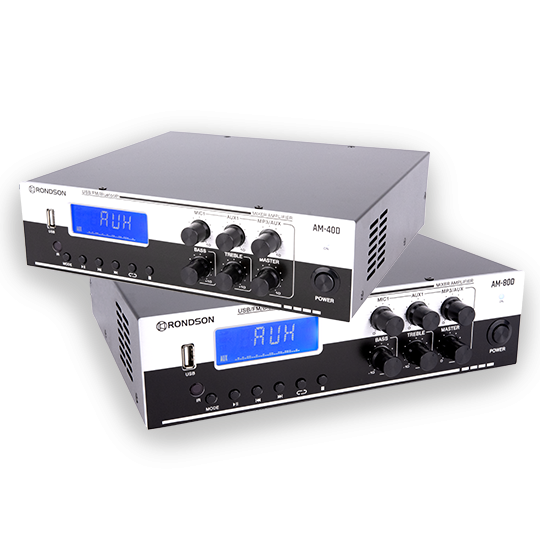
- The mixer-amplifier handles the majority of standard sound systems and is easy to use.
- A power amplifier is most often used to supplement a system in order to achieve the desired power output.
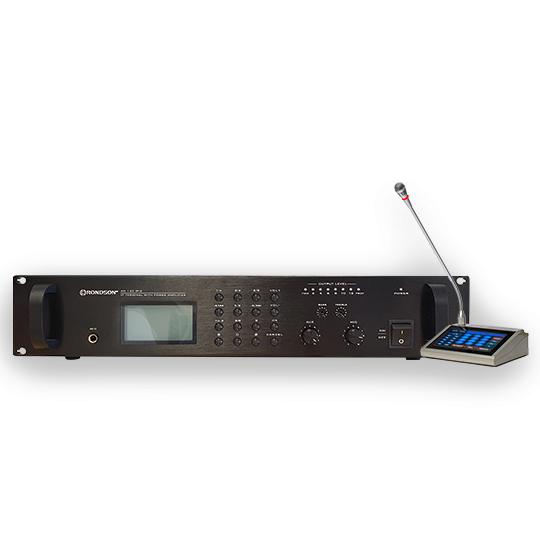
- The matrix amplifier is designed for multi-zone and multi-source use in venues such as shopping centres and hotels.
Amplifiers
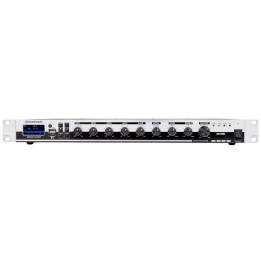
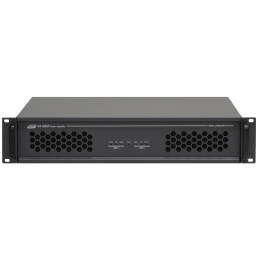

READERS’ CHOICE FOR MULTIMEDIA PLAYERS
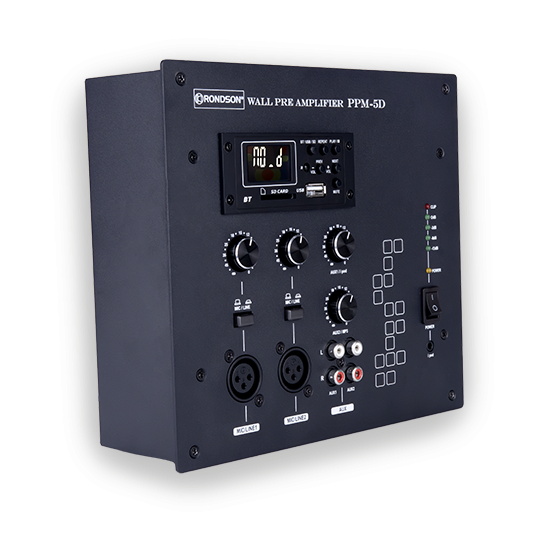
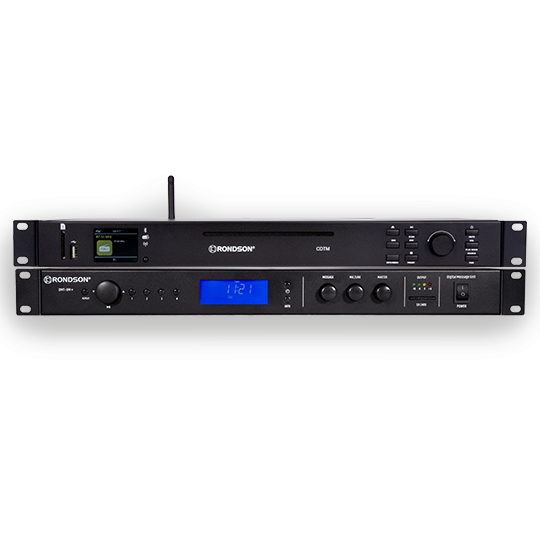
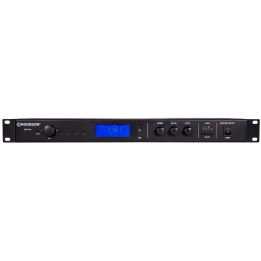
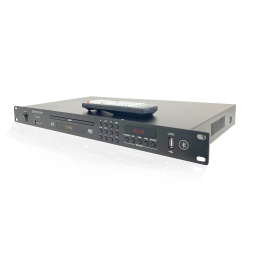
In addition to the system itself, the modulation sources (tuner, MP3, USB, SD or Bluetooth) allow background music or radio to be played if required (ER-100CVB, IR-100).
These modulation sources are only added if the amplifier does not offer this type of function.
Media players
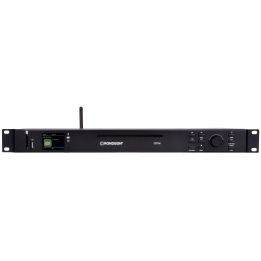
CHOOSING A MICROPHONE
The choice of microphone depends on its intended use, namely whether it is for an event, a speech, a phone call or locating someone.
Any type of microphone is generally compatible with most amplifiers, preamps, mixers, etc.
TYPICAL MICROPHONES: WIRED OR WIRELESS
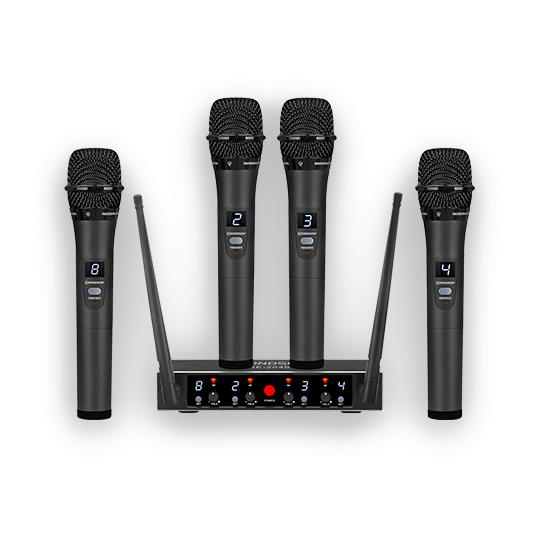
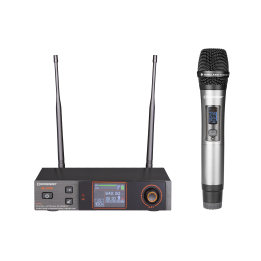
- Wireless microphones are generally used for entertainment or singing, as they make it easier to move around.
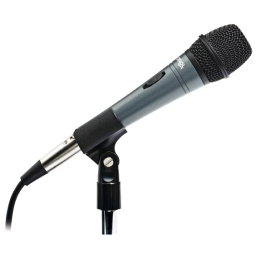
- Wired microphones are most commonly used for speeches and lectures in multi-purpose halls or town halls, for example.
- The public address microphone enables voice calls and messages (shops, shopping centres).
- The public address and multi-zone microphone system enables announcements and paging in large areas.
Microphones
Reference :
BE-5018/H-83
Reference :
UM 915S
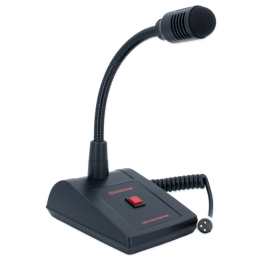
Reference :
PA 100X
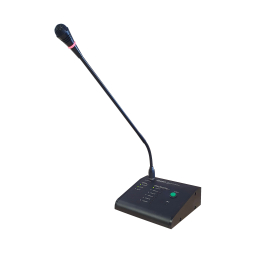
Reference :
MP-6
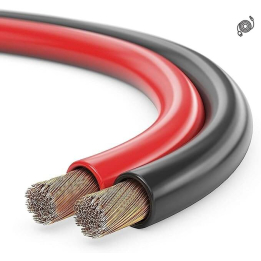
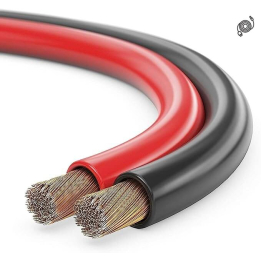
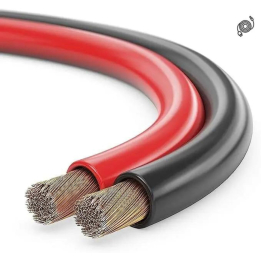
SPEAKER CONNECTION CABLES
The rules to follow!
The cable cross-section depends on the power of the speakers connected to the line, as well as the length of the line
Il faut également savoir que le câblage des haut-parleurs sur une ligne 100V entraîne une perte de la puissance tout au long de la ligne. Cependant, cette perte de niveau ne se ressent pratiquement pas à l’oreille.
It is also important to note that wiring the speakers to a 100V line results in a loss of power along the line. However, this drop in volume is virtually imperceptible to the ear.
| Power | Minimum measured impedance | Cable cross-section 1.5 mm² | Cable cross-section 2.5 mm² | Cable cross-section 4 mm² |
| 30 W | 333 Ω | 4000 m | 6500 m | 10 000 m |
| 50 W | 200 Ω | 2000 m | 3300 m | 5 000 m |
| 120 W | 86 Ω | 1000 m | 1600 m | 2600 m |
| 240 W | 42 Ω | 500 m | 800 ùm | 1300 m |
| 360 W | 28 Ω | 300 m | 550 m | 900 m |
| 480 W | 21 Ω | 250 m | 400 m | 650 m |
Cables
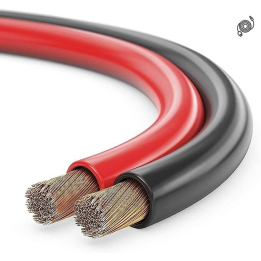
Reference :
CAHP-0/75-50M-RN
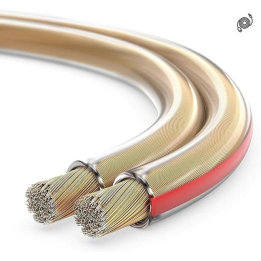
Reference :
CAHP-1/5-100M
Reference :
CAHP-2/5-100M-RN
Reference :
CAHP-4/0-100M-RN
Reference :
CAHP-1/5-200M-RN