





 Catégories produits

Wireless microphone systems are perfect for combining sound quality and ease of use at your events. Whether you need a specific model, it's essential to understand how they work and to know the basic frequencies to consider before making your choice
Everything you need to know about HF Wireless Microphones
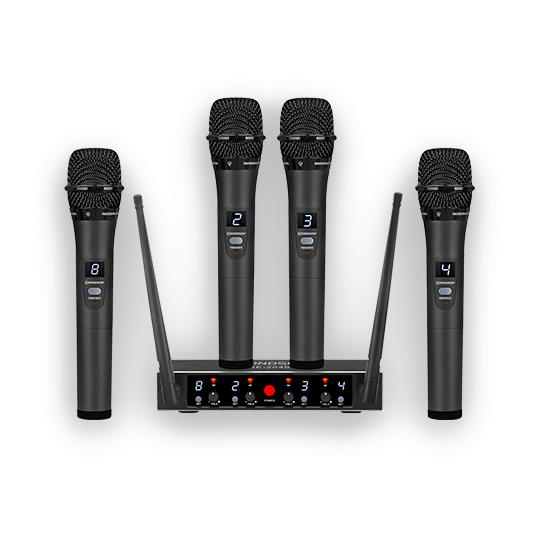
There are three main categories of wireless HF microphones: hand-held, headband and tie microphones. Hand-held microphones are often appreciated for their superior sound quality, while headband and tie microphones are distinguished by their comfort, allowing the user to wear them without strain.
All these models are based on the same transmission principle :
- A transmitter: this can be attached to a belt or integrated directly into the body of the handheld microphone.
- A receiver: a box connected to the public address system.
⚠️ It is advisable not to mix different brands of equipment ⚠️
To ensure optimum compatibility, the transmitter and receiver should come from the same manufacturer and, ideally, from the same product range. A complete kit comprising microphone, transmitter and receiver is often the best option. Not only does this reduce costs, it also ensures perfect consistency between the components.
Some kits, such as the Rondson 5038 2H-83, include several microphones, adapted to different needs. This model, for example, comes with two high-quality hand-held microphones.
When should you choose wireless microphones ?
Wireless microphones are extremely versatile and adaptable to a wide variety of situations. By eliminating cables, they offer total freedom of movement, allowing you to concentrate fully on your performance without having to deal with bulky wires or the risk of getting your feet tangled in them.
They are indispensable in settings such as wedding speeches, seminars or shareholder meetings, where they make it easy to pass the microphone from one person to another, ensuring that your events run as smoothly as possible.
These microphones offer you unrivalled comfort and safety of use, whatever the occasion.
Hand-held microphones are particularly recommended for :
|
COMMERCIAL EVENTS |
PROFESSIONAL EVENTS (TRADE FAIRS) |
SEMINARS AND GENERAL MEETINGS |
|
|
SHOWS AND THEATRE PERFORMANCES |
DJ PERFORMANCE |
SINGING PERFORMANCES |






Headband or tie microphones are ideal for performances that require total freedom of movement, leaving your hands free to concentrate on your presentation or performance.
Which frequencies to choose?
The choice of transmission frequency is essential to ensure that your HF microphone system works properly. This type of system operates on a specific radio frequency, enabling fluid communication between the transmitter and receiver.
In France, certain frequencies are reserved for other uses, such as telephony or military activities, depending on national regulations. That's why it's often advisable to choose a multi-frequency microphone, which gives you a wider range of frequencies, reducing the risk of interference.
What frequencies can be used for wireless HF microphones?
The allocation of frequencies in France is governed by ARCEP (Autorité de Régulation des Communications Électroniques et des Postes), which supervises the use of frequencies for equipment such as HF microphones or stage monitors. The frequency bands currently available for HF microphones are :
- VHF band: 174 to 223 MHz
- UHF band: 470 to 694 MHz
In addition, additional frequency ranges can be used in the following interplanes :
- 822 to 832 MHz
- 1785 to 1805 MHz
⚠️ Avoid ⚠️
The following frequencies are reserved for mobile services and must not be used for HF microphones :
- 694 to 790 MHz
- 791 to 821 MHz
- 832 to 862 MHz
At Rondson, our wireless microphones comply strictly with all applicable regulations. It is also important to note that microphone frequencies vary from country to country. If you plan to travel abroad with your equipment, be sure to check the local rules on usable frequencies.
How do I use several microphones at the same time ?
When using several HF microphones at the same time, it is essential that each one operates on a different frequency. If several HF systems are operating on the same frequency, this can cause interference, resulting in degraded sound quality and frequent signal interruptions.
The basic rule to remember is that each wireless microphone should be set to a separate frequency. To make this easier to manage, some microphone sets are specially designed to work with several units simultaneously, ranging from 2 to 4 microphones depending on the model.
So it's crucial to choose an HF microphone system that's tailored to your specific needs to ensure smooth, efficient operation.
Choosing your microphone: Several criteria to consider when making your selection
The criteria to consider when choosing your microphones will vary according to their use. For example, a microphone intended for commercial use will not have the same requirements as one used for a concert or vocal performance.
Once you've taken this into account, concentrate on the five main criteria that will guide your choice :
|
Transmission quality is essential, especially for vocal and stage performances. It is important to have a reliable transmission that covers a wide range of frequencies, from treble to bass.
Although VHF wireless microphones are generally less expensive, it is advisable to choose UHF models if your budget allows. UHF microphones offer more stable transmission and are less susceptible to interference, due to the smaller number of transmitters operating on these frequencies. Unless you are in a rural area, UHF microphones are preferable.
The type of capsule you choose influences the sound pick-up zone around the microphone. You can opt for cardioid microphones, which pick up sound mainly in front of them, or omnidirectional microphones, which pick up sound evenly in all directions. Omnidirectional microphones are ideal for picking up ambient sound, while cardioid microphones are more effective for isolating a person's voice or the sound of an instrument.
The signal-to-noise ratio is also an important criterion. Some models, notably those from Rondson and Segon, incorporate noise reduction technologies, which can greatly improve sound quality.
The range of the microphones is another aspect to be assessed. It is essential to know the distance over which the signal can be reliably transmitted between the transmitter and receiver. This distance can vary from model to model and can be affected by environmental factors such as physical obstacles or electromagnetic interference. |
 Sound quality
Finally, depending on your specific needs, other factors such as gain settings and battery life should also be taken into consideration.
Professional HF microphones to suit all your needs
At Rondson, we've been sound specialists for over 55 years, which is why it's vital for us to offer you a quality sound system at all times. To do this, we offer you a selection of microphone-transceiver sets offering the best value for money.
BE-10 SERIESFrom RONDSON, a 2 - 4 CHANNEL set with FIXED frequencies BETWEEN 501 - 687 mhz / 10 MW Ensemble microphone HF TRUE DIVERSITY avec micro à main Ensemble UHF avec boîtier émetteur et micro-cravate |
.jpg) |
.jpg) |
BE-50 SERIESFrom RONDSON, a 1 - 2 CHANNEL set with SELECTABLE frequencies BETWEEN 500 - 700 mhz / 30 MW Ensemble double UHF avec 2 microphones cravate Ensemble récepteur double UHF - 2 micros à main Ensemble double UHF avec 1 microphone à main et 1 micro-cravate |
JS-WM SERIESFrom SEGON, a 1 - 2 CHANNEL set with SELECTABLE frequencies BETWEEN 660 - 690 mhz / 30 MW. Ensemble récepteur double avec 1 microphone à main sans fils et 1 microphone cravate Ensemble récepteur double avec 2 microphones cravate Ensemble récepteur double avec 2 microphones à main sans fils |
.jpg) |
|
|
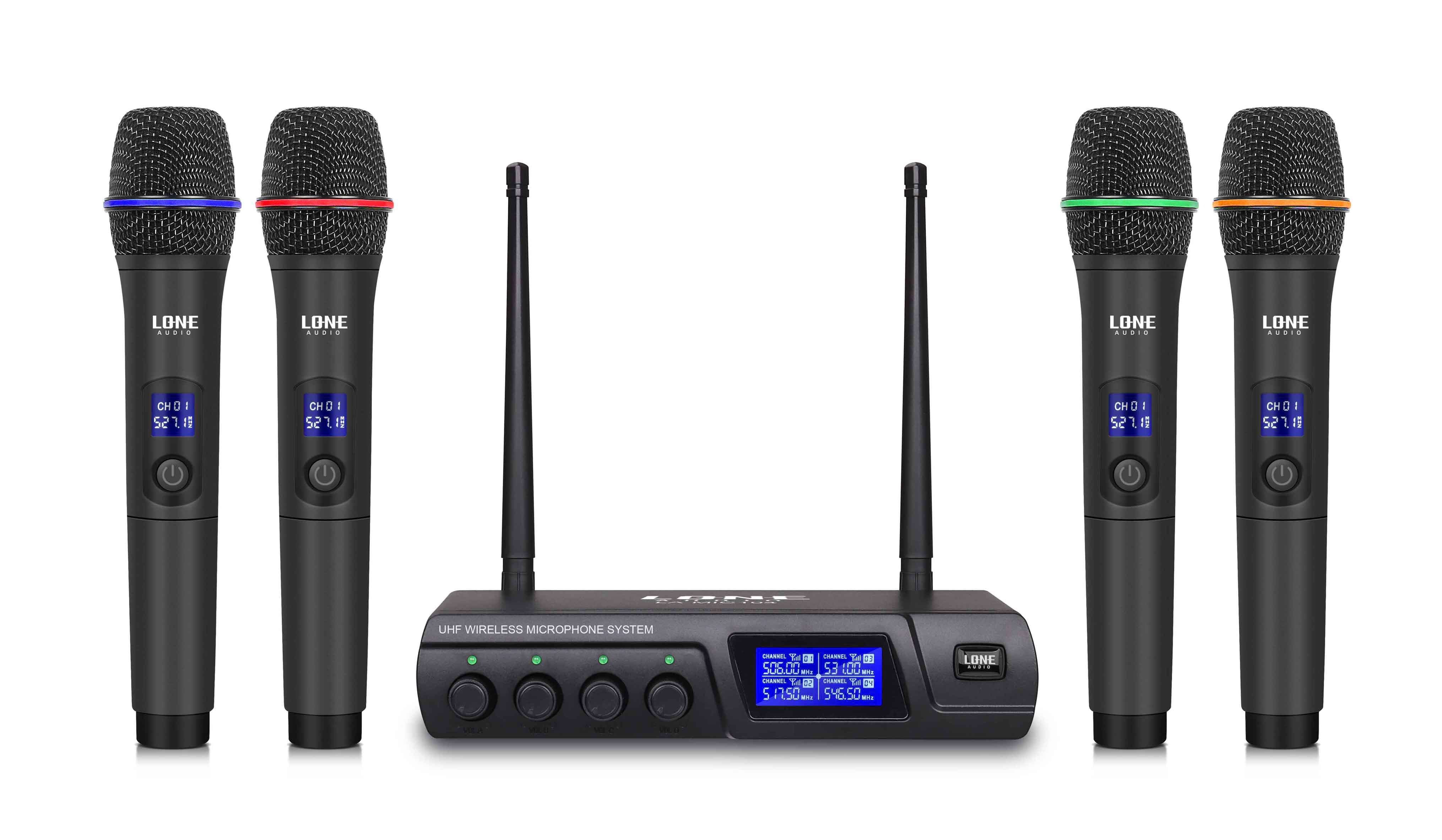
LA MIC SERIES - Brand LONE AUDIOFrom Lone Audio, a 1 - 2 CHANNEL set with FIXED frequencies BETWEEN 500 and 700 MHz / 10 MW. Dual-channel HF microphone system with 2 hand-held microphones Dual-channel HF microphone system with 1 handheld microphone |
.jpg)
Something new on the horizon!
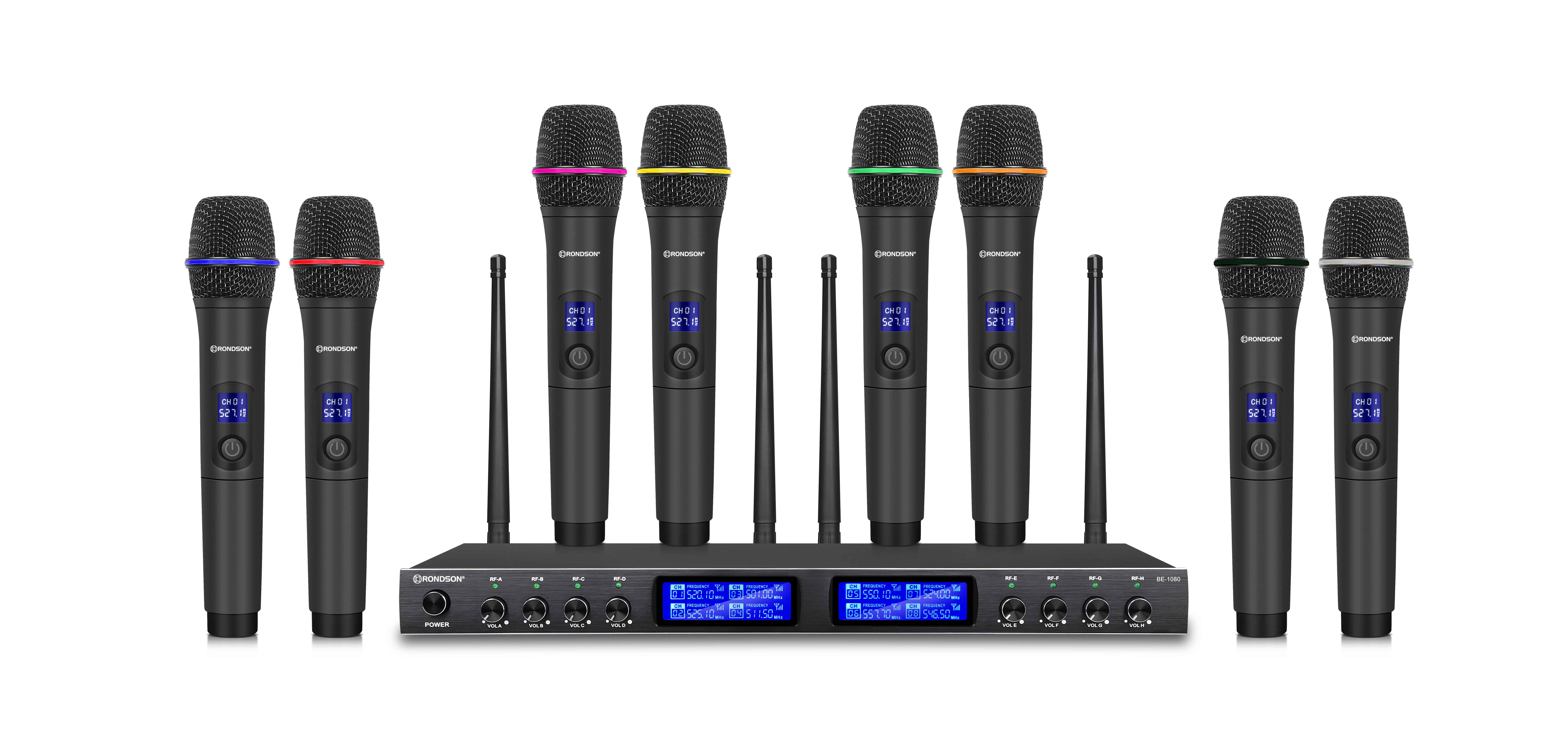
By the end of 2024, Rondson plans to expand its range of microphones to provide more solutions to your sound problems. Here's a teaser of these products. Are you interested ?
 |
|
|
 |
NOTES TO REMEMBER
There are three types of HF wireless microphone equipment: hand-held, headband and tie microphones, all of which operate with a receiver.
Hand-held microphones are often renowned for their superior sound quality, while headband and tie microphones are appreciated for their comfort and discretion.
These microphones are suitable for a variety of occasions, including receptions, professional events, shows and singing performances. Headworn and tie microphones, on the other hand, allow complete freedom of movement, making them particularly useful in contexts where interaction is essential.
When choosing your microphone, it's crucial to consider a number of factors: sound quality, range, capsule type, signal-to-noise ratio and battery life. For a more secure transmission, we also recommend UHF microphones. Finally, opt for complete sets to ensure perfect compatibility between all the components.
To find out more, contact our experts at contact@rondson.com or ASK FOR A QUOTE